
How to Clean Gold Jewellery at Home (2026 Guide)
Learn how to clean gold jewellery at home safely: the warm soapy water method for 22k, 21k and 18k pieces, what never to use, and when to see a jeweller.
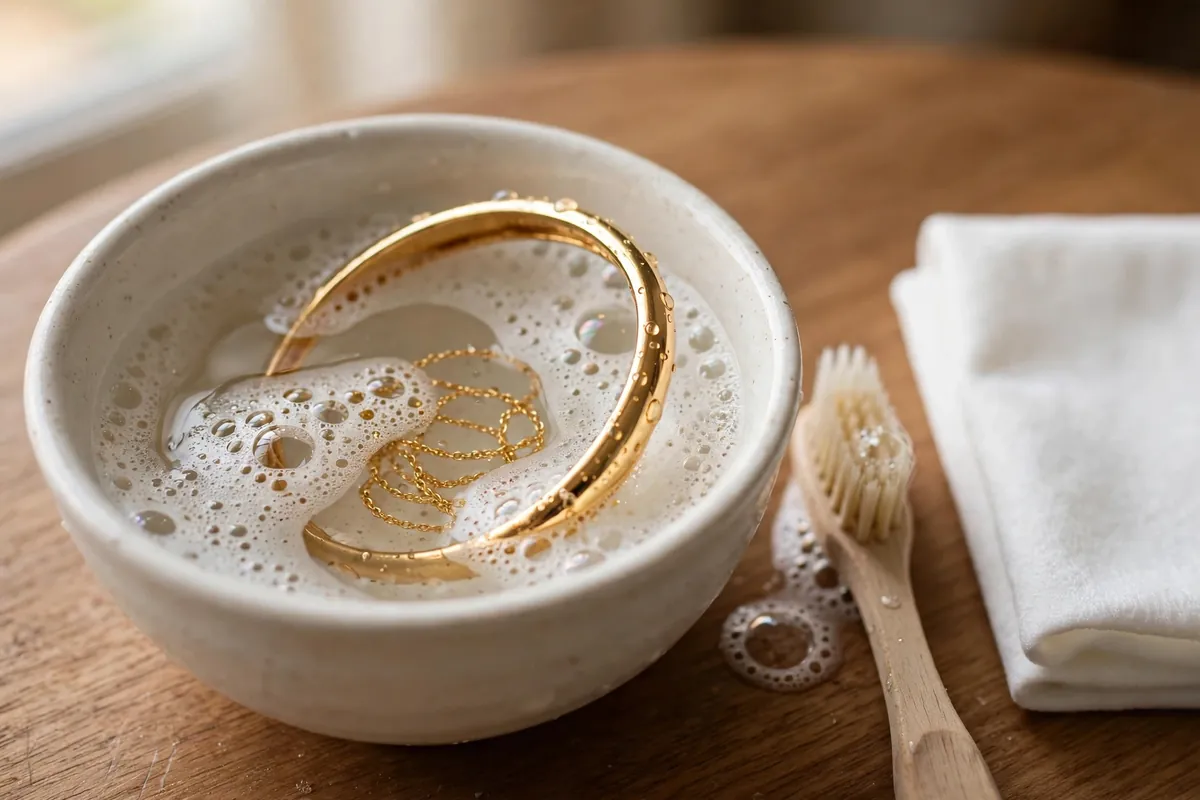
Gold jewellery loses its shine slowly. Skin oils, hand cream, dust and soap film build up a thin layer on every ring, chain and bangle you wear, and that layer dulls the metal. The good news is that you can fix it at home in a few minutes with warm water and mild soap. This guide shows how to clean gold jewellery at home safely, which pieces need extra care, and which home remedies you should never use.
How to Clean Gold Jewellery at Home in 5 Steps
Fill a small bowl with warm water and a few drops of mild washing-up liquid. Soak the piece for 15 minutes. Brush it gently with a very soft toothbrush, reaching into links and settings. Rinse it under lukewarm running water over a plugged sink or a strainer. Pat it dry with a soft, lint-free cloth.
You need only five simple items, and most homes already have them all.
- A small bowl and warm water. The water should feel comfortable on your hand, never hot.
- Two or three drops of mild washing-up liquid with no added bleach or grit.
- A very soft toothbrush. A baby toothbrush is ideal because the bristles are extra gentle.
- A soft, lint-free cloth for drying, such as a microfibre cloth.
- A strainer, or a plugged sink, so a small piece cannot slip down the drain.
Warm water loosens oils and lotion without stressing the metal or the glue that holds some stones in place. Hot or boiling water can loosen glued stones and weaken clasps, so test the water on your wrist first. If it feels hot to you, let it cool before you start.
Why Gold Loses Its Shine
Pure gold does not tarnish or rust. What you see as dullness is a film of skin oils, soap, lotion and dust sitting on the metal. Cleaning lifts that film away and the gold itself stays untouched. That is why gentle soap and water works so well, and why harsh chemicals are never needed.
Most jewellery is not pure gold. A 22k piece is 91.6 percent gold and 8.4 percent other metals, while a 21k piece is 87.5 percent gold. Those added metals give the piece its strength, and they are the part that can react with chemicals. That is why the cleaning method must stay gentle. If you are unsure what karat your piece is, read our guide to checking gold purity before buying first.
Cleaning Different Types of Gold Jewellery
22k and 21k gold
The soap and water method is safe for solid 22k and 21k pieces, including heavy bridal sets and plain bangles. These karats are soft, so brush with a light touch and never use anything abrasive. Dry each piece fully before you store it, because water trapped inside a hollow bangle can leave marks.
18k and 14k gold
Lower karat gold is harder and stands up well to the same method. Rings and chains in 18k and 14k can be cleaned once a week if you wear them every day. If you are unsure which karat suits daily wear, compare them in our 14k vs 18k gold comparison.
White gold
White gold carries a thin coat of rhodium that gives it its pale colour. Soap and water will not harm it, but never rub it with polish, paste or a hard brush, because that wears the coat away. When the coat thins and a yellow tint shows through, a jeweller can plate it again.
Gold with stones, pearls and enamel
Hard stones such as diamonds, sapphires and rubies can be cleaned with the same soak and soft brush. Pearls, opals, turquoise and enamel need different care. Never soak them and never use soap on pearls. Wipe them with a damp soft cloth only. If a stone feels loose, stop and take the piece to a jeweller.
What Never to Use on Gold Jewellery
- Toothpaste: it is mildly abrasive and leaves fine scratches on polished gold over time.
- Bleach and chlorine: pool water and household bleach can weaken gold alloys, especially white gold.
- Baking soda paste: it can clean plain solid gold, but it is gritty enough to scratch polished surfaces, so skip it.
- Boiling water: it can loosen glued stones and stress settings.
- Paper towels and rough cloths: they scratch. Use a soft microfibre cloth instead.
- Home ultrasonic cleaners: they suit plain solid bands, but they can shake loose stones and crack fragile gems, so leave them to a jeweller.
How Often Should You Clean Gold Jewellery?
Clean pieces you wear every day once a month, and wipe them with a soft cloth once a week. Pieces you wear rarely need a clean only before you wear them and after long storage. A ring that sits against skin all day gains most from a quick weekly wipe, which stops lotion and soap film from building up.
A regular routine also helps you spot problems early. A loose prong, a worn clasp or a thinning chain shows up while you clean. Catching those faults early costs far less than losing a stone.
Storage Habits That Keep Gold Clean Longer
Cleaning matters less when storage is right. Keep each piece in its own soft pouch or a lined box section so pieces do not rub and scratch each other. Put jewellery on last, after perfume, hairspray and lotion, and take it off first. Keep it away from swimming pools and cleaning chemicals.
- Store each piece on its own in a soft pouch.
- Put jewellery on after perfume and lotion, never before.
- Take rings off before cleaning, swimming or gym work.
- Wipe pieces dry after a hot or humid day.
When to Take Gold to a Jeweller Instead
Home cleaning covers everyday dirt. Take the piece to a jeweller when a stone is loose, a clasp is broken, a chain is kinked, or the surface has deep scratches. A jeweller can steam clean the piece, tighten settings and polish out light scratches without thinning the metal. Antique or heavily engraved pieces also deserve a professional clean.
Clean gold looks brighter, and a clean piece is easier to value fairly. If you ever decide to sell, a gentle wash first helps a buyer see the piece at its best. Read our guide to selling used gold in Saudi Arabia and the UAE and check how melt value is calculated before you accept any offer. For the value of the metal itself, see the live gold price per gram.
Related Guides & Tools

Certified Financial Planner and Precious Metals Valuation Specialist with over a decade of experience analyzing GCC physical bullion markets and jewelry economics.
View Full Analyst Profile & Disclosures ➔Frequently Asked Questions
Can I clean gold jewellery at home with toothpaste?
No. Toothpaste is mildly abrasive and leaves fine scratches on polished gold over time. Warm water with a few drops of mild washing-up liquid and a very soft brush cleans just as well without any risk to the finish.
Is soap and water safe for 22k gold jewellery?
Yes. Warm water and mild soap are safe for solid 22k, 21k and 18k gold. Soak the piece for 15 minutes, brush gently, rinse under lukewarm water and pat dry with a soft cloth. Keep the water warm, never hot.
How often should I clean my gold jewellery?
Clean pieces you wear every day once a month and wipe them with a soft cloth once a week. Pieces you wear rarely need a clean only before wearing and after long storage.
Can I use baking soda to clean gold?
It is best to skip it. Baking soda paste is gritty enough to scratch polished gold surfaces. Mild soap and warm water give the same result with no risk, so there is no reason to use anything harsher.
Should I clean gold jewellery before selling it?
Yes. A gentle wash with warm soapy water helps a buyer see the piece at its best and can support a better offer. Never use toothpaste, bleach or boiling water first, and read our guide to selling used gold before you accept any price.