
Traditional Saudi Gold Jewelry: From Kursi Jaber to 21k Mabrouma Bangles
The Cultural Significance of Gold in Saudi Arabia
In Saudi Arabia, gold is far more than a transient financial asset or mere adornment; it is deeply rooted in cultural heritage, elaborate wedding ceremonies, and female economic empowerment. When discussing traditional Saudi jewelry, the conversation almost exclusively revolves around 21k gold (87.5% purity). This specific karat provides the perfect equilibrium between a rich, deep yellow hue and the structural tensile strength required for massive, intricate designs.
Recently, there has been an explosive surge in searches for specific traditional pieces such as "Kursi Jaber," "Mabrouma," "Ghuwaish," and "21k gold bangles." In this comprehensive guide, we will deconstruct these iconic cultural pieces, explain their typical weights, and detail exactly how their making charges (Al-Masnaiya) are calculated.
Kursi Jaber Gold: The Crown Jewel of Saudi Brides
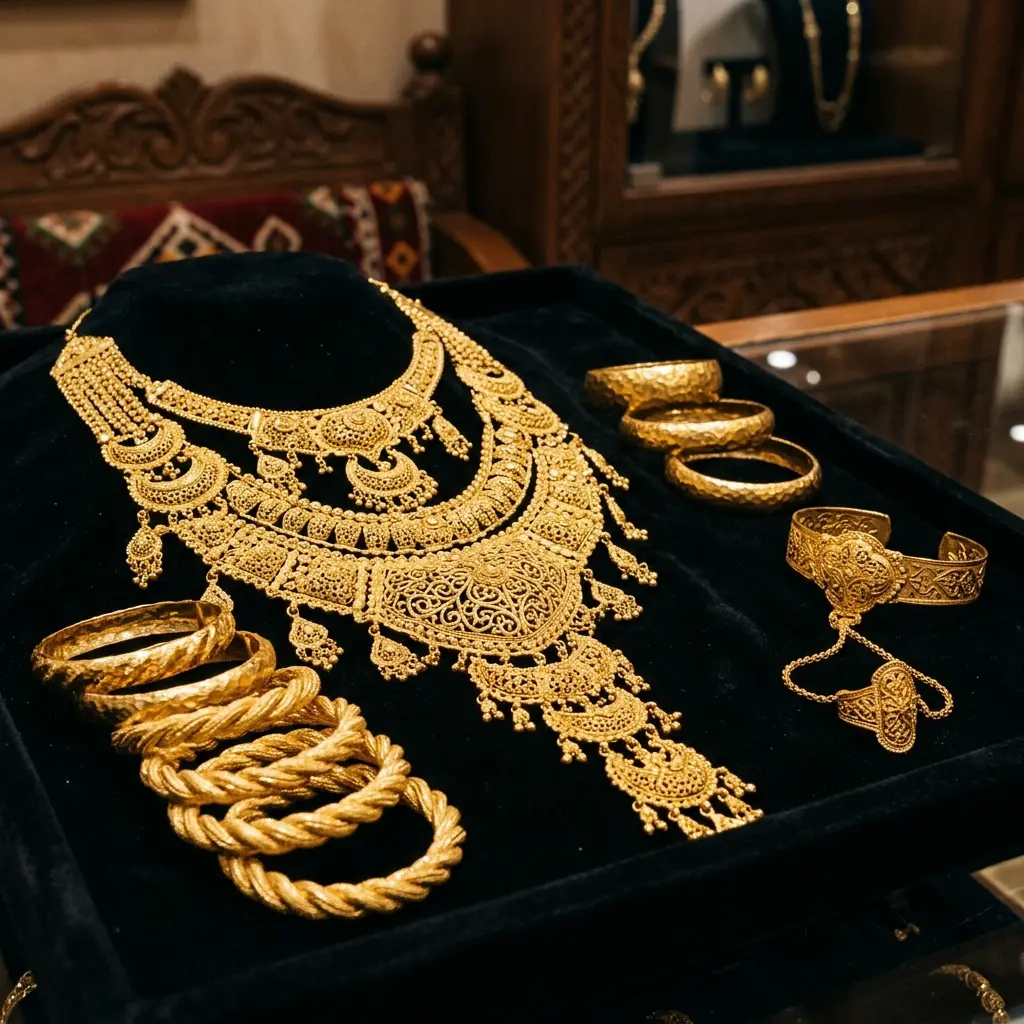
"Kursi Jaber" is arguably the most luxurious and famous traditional gold set in the Gulf region, characterized by its colossal size that dramatically covers the entire chest.
This masterpiece typically consists of a wide, incredibly intricate centerpiece necklace. It is forged exclusively in 21k gold to support its staggering weight, which ranges anywhere from 100 grams up to 500 grams (half a kilo) for custom bespoke pieces. Because of the exhaustive manual labor required to engrave and construct the delicate filigree, the making charges (Al-Masnaiya) for a Kursi Jaber are considerably higher than simple chains or bangles.
21k Gold Bracelets: Mabrouma & Ghuwaish
21k gold bracelets (Asawer) are statistically the highest-selling items in Saudi gold shops for daily wear and gifting. They are categorized into highly sought-after cultural styles:
- Mabrouma (Twisted Gold):A thick, solid bracelet featuring a tightly "twisted" or braided rope-like design. The Mabrouma is exceptionally heavy and is considered a prime investment piece because its making charges are relatively low compared to its massive raw gold weight.
- Ghuwaish & Banajer (Rigid Bangles):These are rigid, circular slip-on bangles traditionally worn in stacked sets (usually 3 to 6 together). Because Ghuwaish are largely machine-manufactured and laser-engraved in bulk, their making charges are among the absolute lowest in the retail market, making them perfect for wealth preservation.
- Kaff (Hand Bracelet):A delicate bracelet that connects to one or more rings via chains draping across the back of the hand (similar to a slave bracelet). It has seen a massive resurgence in modern Khaleeji fashion.
How to Calculate the Price (Making Charges)
When entering a jewelry shop in Riyadh or Jeddah to purchase Ghuwaish or a Kursi Jaber, you must understand the exact pricing formula to negotiate effectively:
The making charge for simple machine-made Ghuwaish should reasonably range between 15 to 25 SAR per gram. However, intricate handcrafted centerpieces like the Kursi Jaber can easily command making charges of 40 to 50 SAR per gram.